History
Through services between the two lines were originally to be Sakura alone; Mizuho was added under JR Kyushu's lead as a fastest service with fewer stops, designed to compete with air travel. From the outset it was aimed primarily at the business market, launching with two return services in the morning and two in the evening; it stops at only a handful of stations, and every train calls at Shin-Kobe, Okayama, Hiroshima, Kokura, Hakata and Kumamoto.
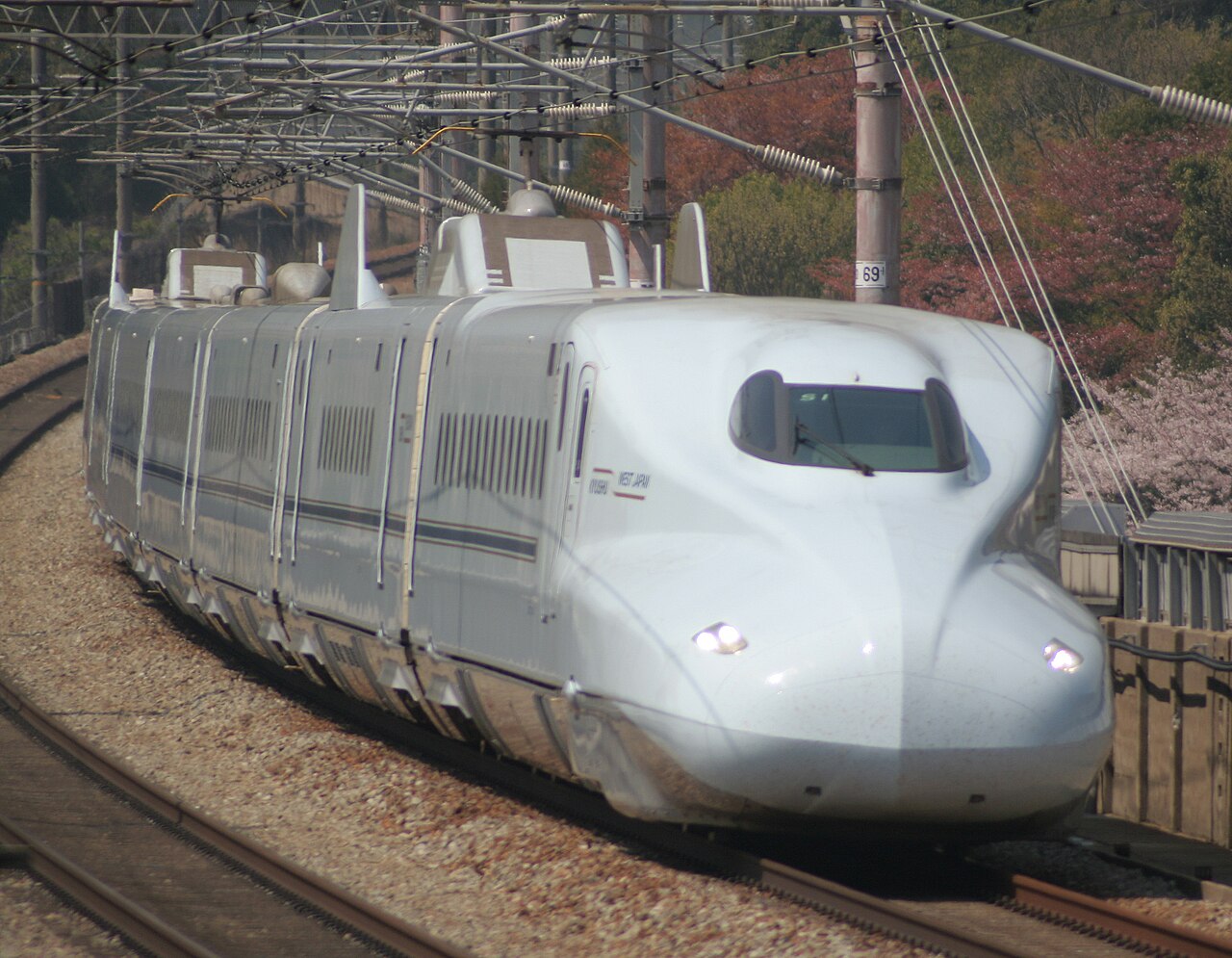
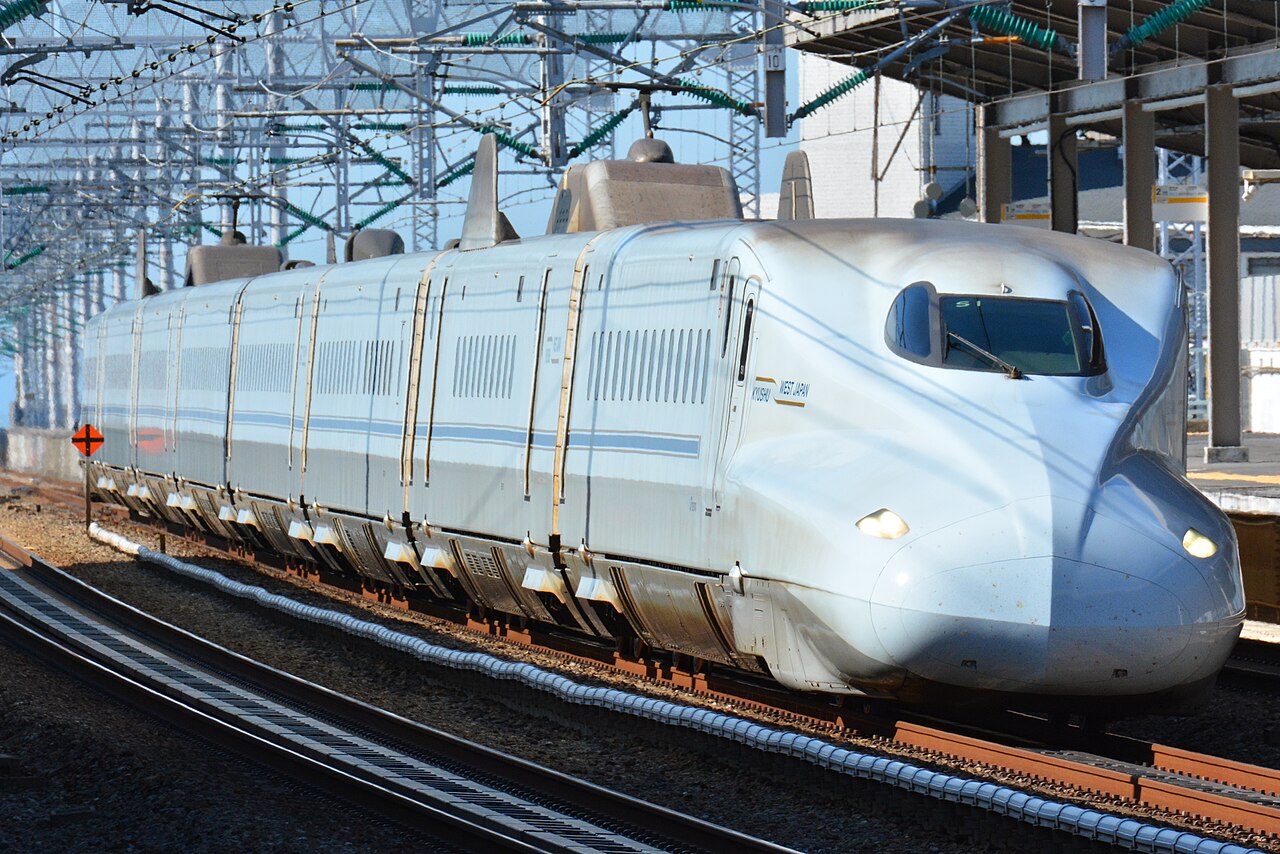
Operationally, Mizuho is worked by eight-car trainsets — JR West N700-7000 series and JR Kyushu N700-8000 series, the same types used on the through Sakura services — running at a maximum of 300 km/h on the San'yō Shinkansen and 260 km/h on the Kyūshū Shinkansen. At its launch the fastest Shin-Ōsaka to Kagoshima-Chūō run took 3 hours 45 minutes, some 25 minutes quicker than the Sakura services. The timetable then grew steadily. From 17 March 2012 an additional daily return working was added (four to five), and the lifting of a speed restriction near Shin-Yatsushiro cut the fastest Shin-Ōsaka to Kagoshima-Chūō time to 3 hours 42 minutes. By 15 March 2014 there were six per direction, with two trains each way stopping at Himeji to improve Kansai connectivity. As of 14 March 2020 there were eight per direction, some making extra stops at Sendai, Kurume, Shin-Yamaguchi, Fukuyama or Himeji; Fukuyama and Shin-Yamaguchi became regular Mizuho stops with that timetable change.
On the San'yō Shinkansen, Mizuho is handled like Nozomi, with a fare structure separate from that of the other trains. The Japan Rail Pass cannot be used on any section, even in non-reserved cars, but Pass holders can ride by buying an additional dedicated option ticket. JR West and JR Kyushu's target of a 20 to 30 per cent share of Ōsaka–Kagoshima travel was met, with a share of at least 20 per cent in every year from fiscal 2012.
Timeline
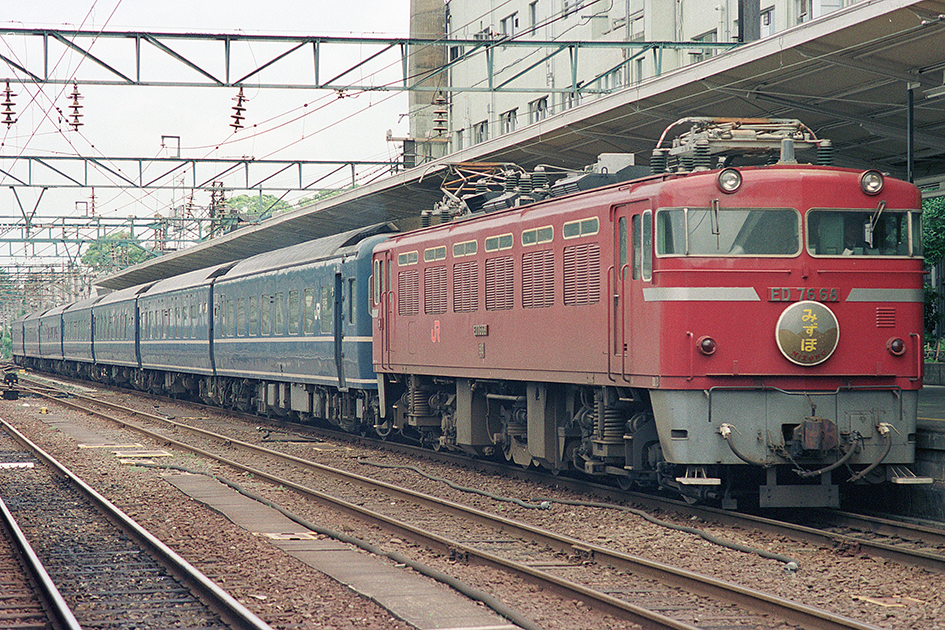
- 1961The name Mizuho is first introduced (1 October 1961) as a JNR limited-express sleeping-car service running from Tokyo to Kumamoto in Kyushu.
- 1994The original JNR Mizuho sleeping-car limited express is discontinued (from 3 December 1994).
- 2010On 20 October 2010 JR West and JR Kyushu formally announce that the Mizuho name will be revived for a new limited-stop Shinkansen service from 12 March 2011.
- 2011Mizuho begins operating on 12 March 2011, the day the Kyushu Shinkansen opens end to end, running Shin-Osaka to Kagoshima-Chuo with four return workings and a fastest time of 3 hours 45 minutes.
- 2012From 17 March 2012 an additional daily return working is added (four to five), and removal of the speed restriction near Shin-Yatsushiro cuts the fastest Shin-Osaka to Kagoshima-Chuo time to 3 hours 42 minutes.
- 2014By 15 March 2014 there are six daily return workings per direction, with two trains each way newly stopping at Himeji.
- 2020As of 14 March 2020 there are eight daily return workings per direction, with Fukuyama and Shin-Yamaguchi promoted to scheduled Mizuho stops.
Sources
Last updated 16 October 2026.
Gallery 6 photos
Every photo for this page. Tap any image to view it full-size. All from Wikimedia Commons (credit under each).