History
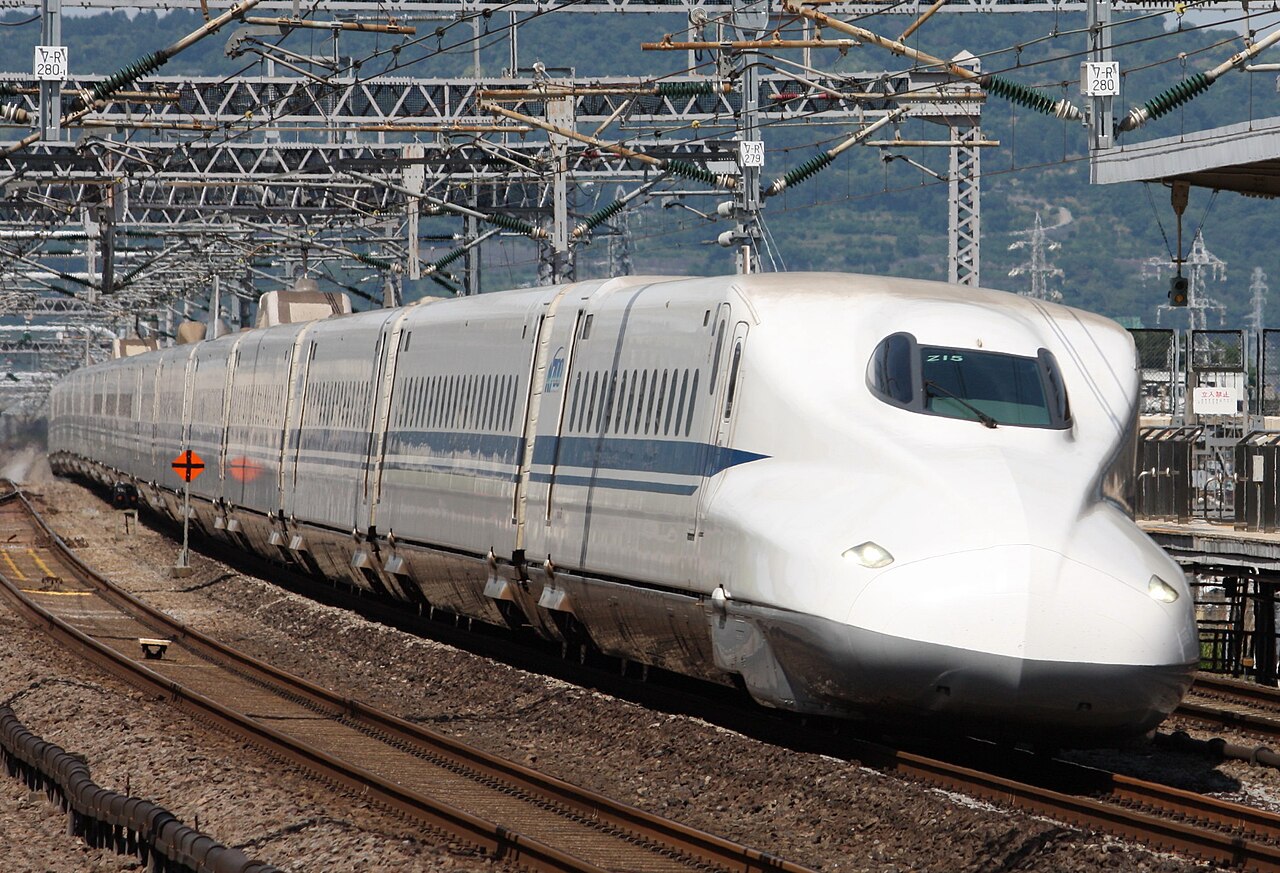
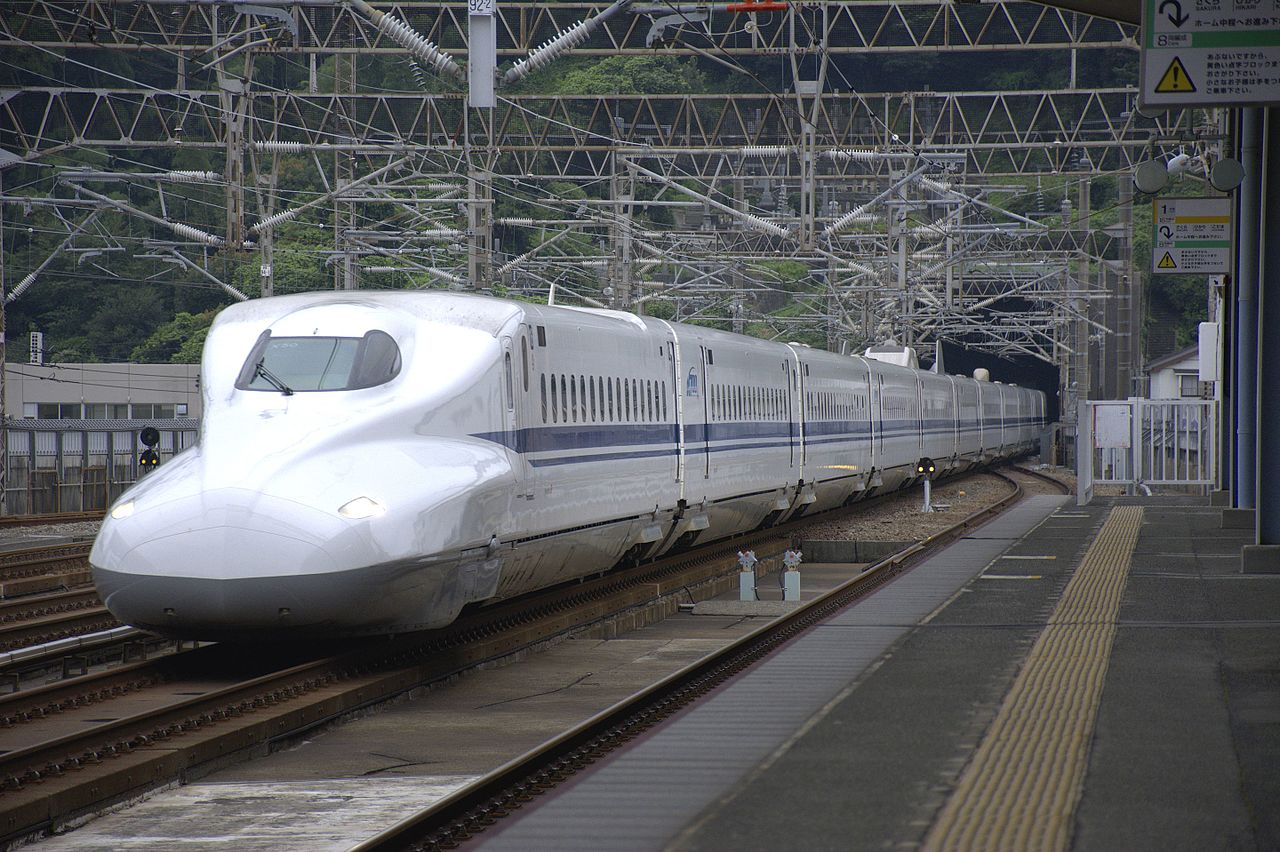
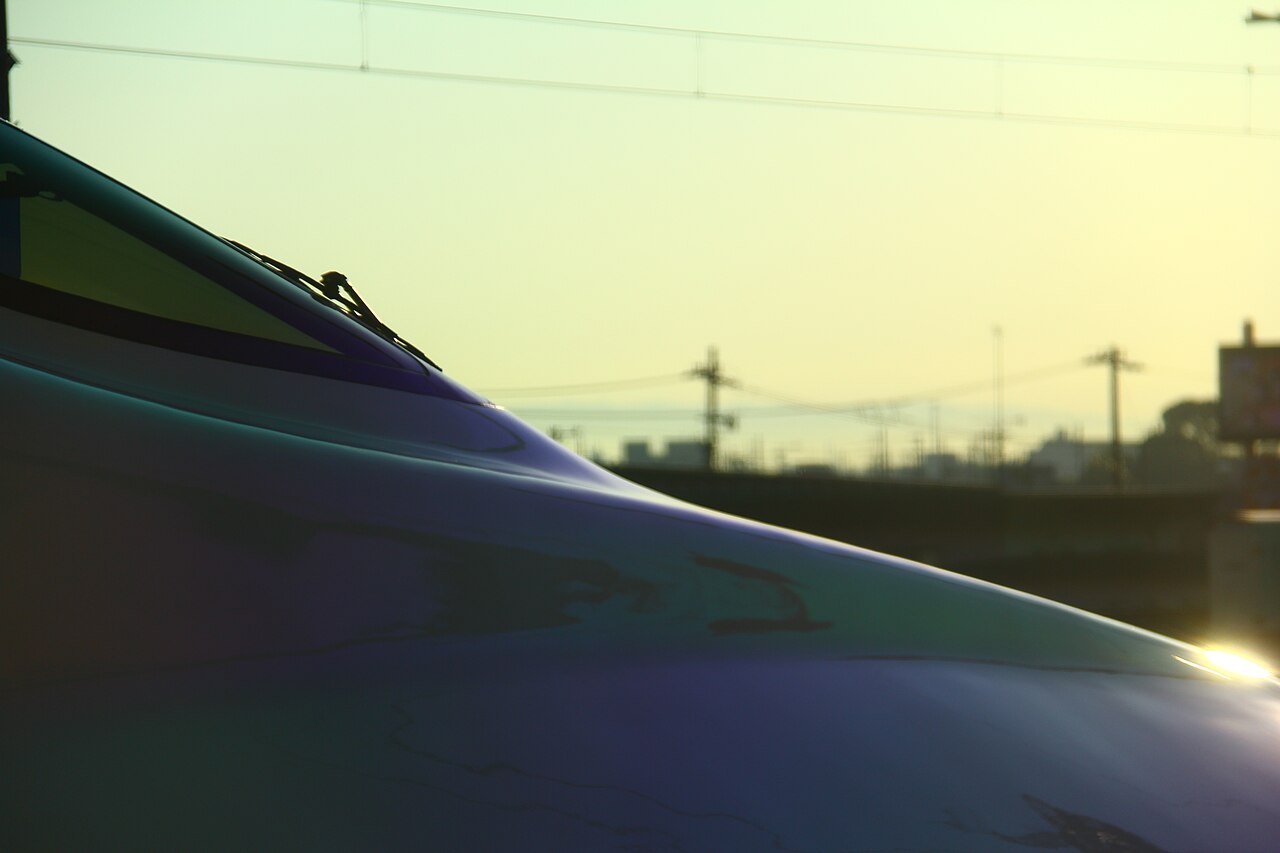
Its defining feature is an air-spring body-tilting system — the first fitted to a Shinkansen vehicle — that tilts the car body up to one degree, allowing sustained running at 270 km/h on the 2,500 m radius curves of the Tokaido Shinkansen that had previously been limited to 255 km/h; the maximum operating speed on the San'yo Shinkansen is 300 km/h. The aerodynamic nose, refined from the 700 series' "aero-stream" form using a genetic algorithm and lengthened to 9,620 mm, is called the "aero double-wing" shape, likened to an eagle spreading its wings. Combined with the tilting, a high starting acceleration of 2.6 km/h/s let the fastest Nozomi cover Tokyo to Shin-Osaka in 2 hours 25 minutes at the 2007 debut timetable.
An 8-car version jointly developed by JR West (7000 subseries, S sets) and JR Kyushu (8000 subseries, R sets) entered through service on Mizuho and Sakura runs between the San'yo and Kyushu Shinkansen from 12 March 2011, when the Kyushu Shinkansen opened in full. From 2013 the original 16-car sets were progressively rebuilt toward the later N700A specification, JR Central's Z sets becoming X sets and JR West's N sets becoming K sets, and from 2020 the N700 began to be replaced by its successor, the N700S. The N700 series remains in revenue service and won the Japan Railfan Club's Blue Ribbon Award in 2008.
Timeline
- 2005Pre-series 16-car prototype set Z0 completed on 4 March and unveiled at JR Central's Hamamatsu Works; on 7 September it recorded 320 km/h in a speed-up test.
- 2007Revenue service begins on 1 July; the first production Z set (Z1) had been delivered to JR Central in April, and trains entered service on eight daily Nozomi runs, replacing the 300, 500, and 700 series.
- 2008By the end of February 2009 the N700 was working 74 Nozomi services per day; the type received the Blue Ribbon Award (51st) in 2008.
- 2009On 16 November, JR Central ran a high-speed demonstration with set Z0, recording 332 km/h on the Tokaido Shinkansen between Maibara and Kyoto for international guests.
- 2011Eight-car N700-7000 (S, JR West) and N700-8000 (R, JR Kyushu) sets enter service on through Mizuho and Sakura runs from 12 March, with the full opening of the Kyushu Shinkansen.
- 2012The final Z set (Z80) is delivered early in the year; from the 17 March timetable revision all regularly scheduled Nozomi services run with N700 series sets, and in April JR Central announces the retrofit of its 80 Z sets toward N700A specification.
- 2013Retrofitting of the original 16-car sets begins (fiscal 2013): JR Central's Z sets are renumbered X (2000 subseries) and JR West's N sets renumbered K (5000 subseries).
- 2020The successor N700S enters service on 1 July (first four sets), beginning the gradual replacement of the N700; withdrawals of N700 X sets commence in July (set X12).
Sources
Last updated 16 October 2026.
Gallery 6 photos
Every photo for this page. Tap any image to view it full-size. All from Wikimedia Commons (credit under each).