History
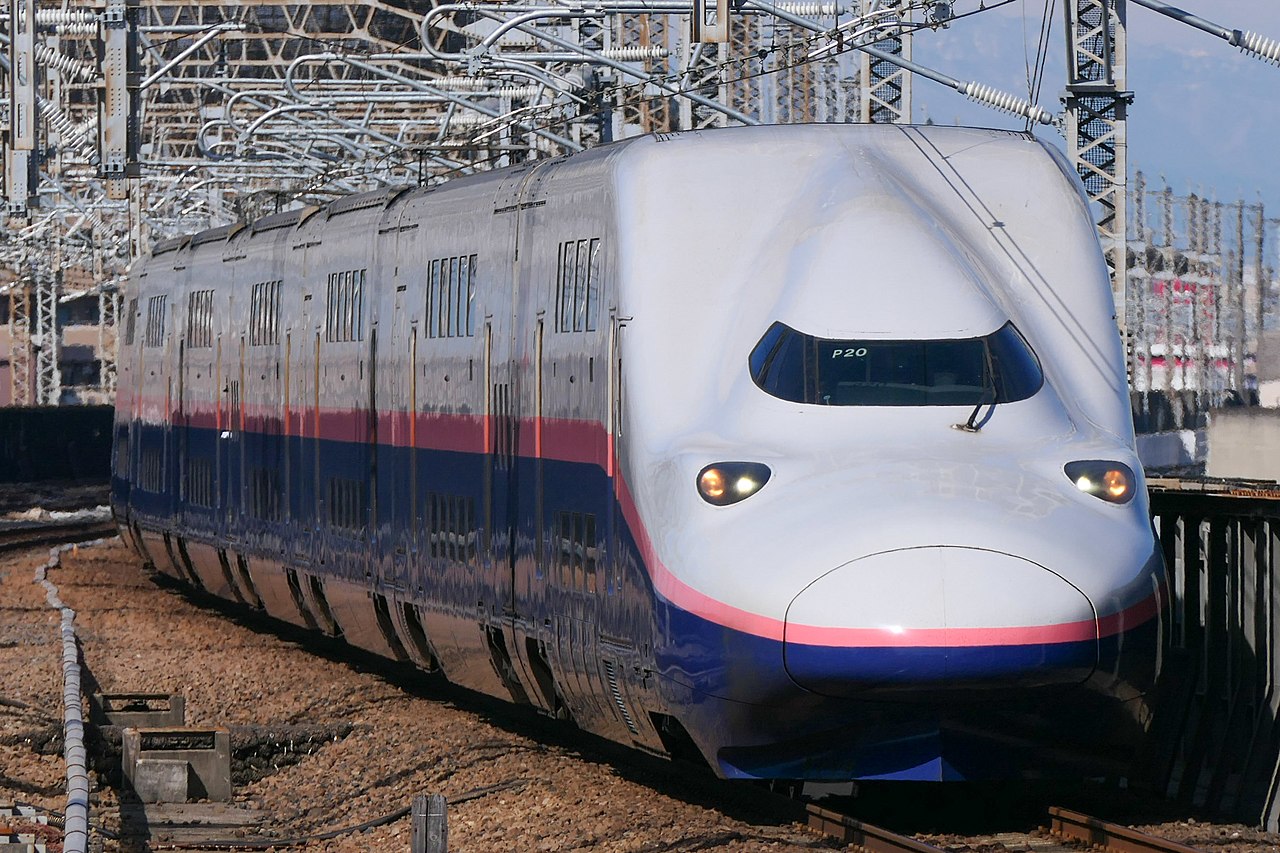
The name was first introduced on 15 November 1982 — the day the Jōetsu Shinkansen opened — but for a conventional limited express (written "谷川") between Ueno and Minakami on the Jōetsu Line. The Shinkansen name (written "たにがわ") dates from 1 October 1997, when JR East restructured Tōhoku and Jōetsu Shinkansen names by section: Tokyo/Echigo-Yuzawa–Niigata trains became Asahi (renamed Toki in 2002) while Tokyo–Takasaki/Echigo-Yuzawa trains became Tanigawa, taking over the short-distance all-stations role. Double-deck E1 and E4 sets ran under the separate "Max Tanigawa" brand; E4 operation began on 7 May 2001, and the brand ended when the E4 was withdrawn on 1 October 2021. From 18 March 2007 all trains were no-smoking.
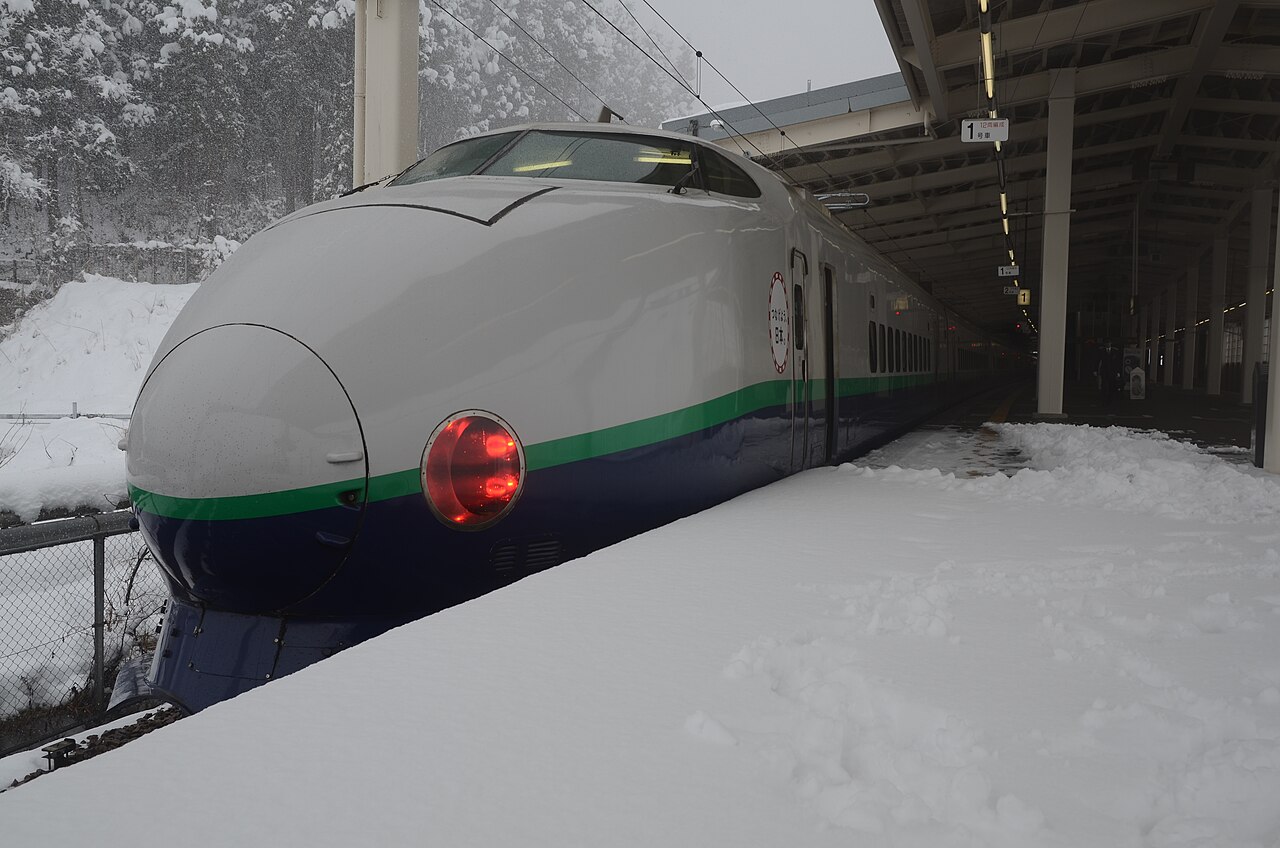
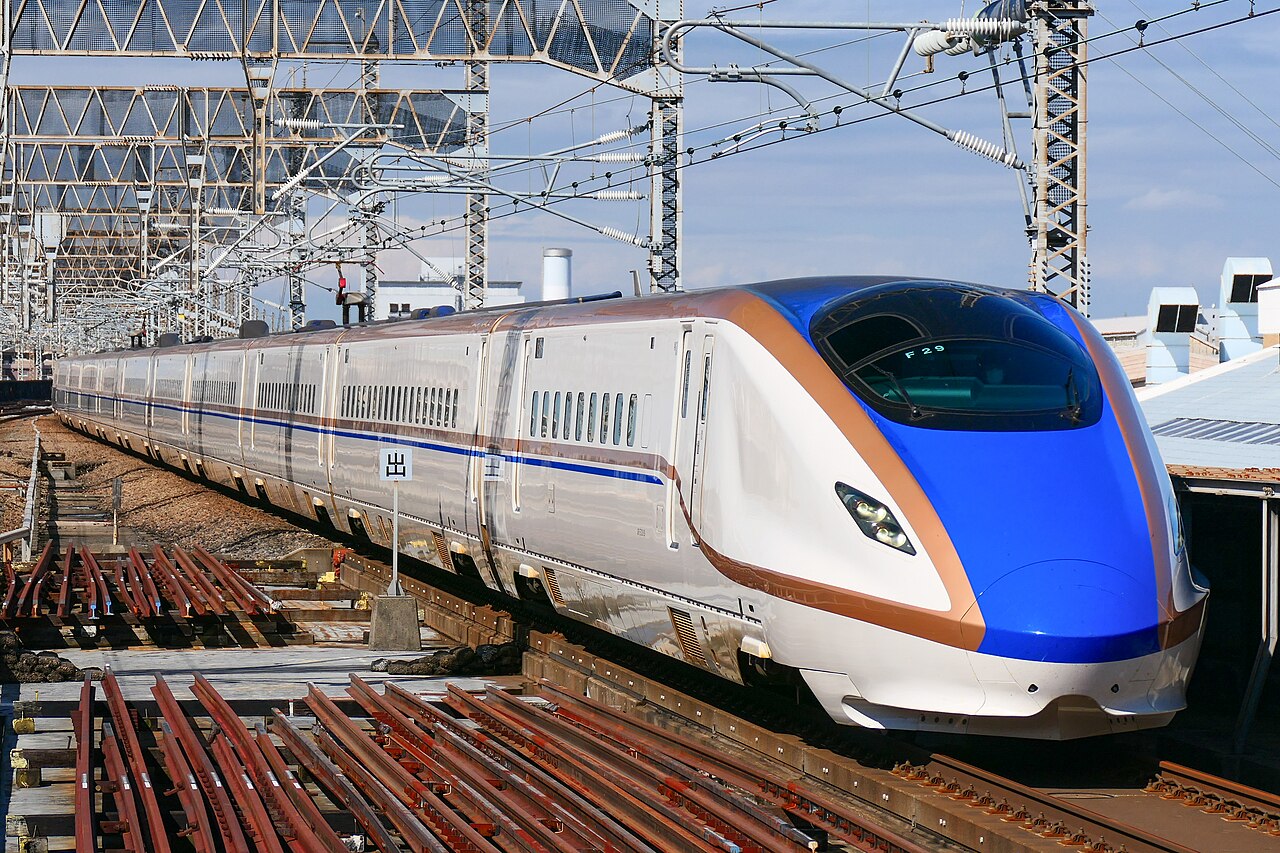
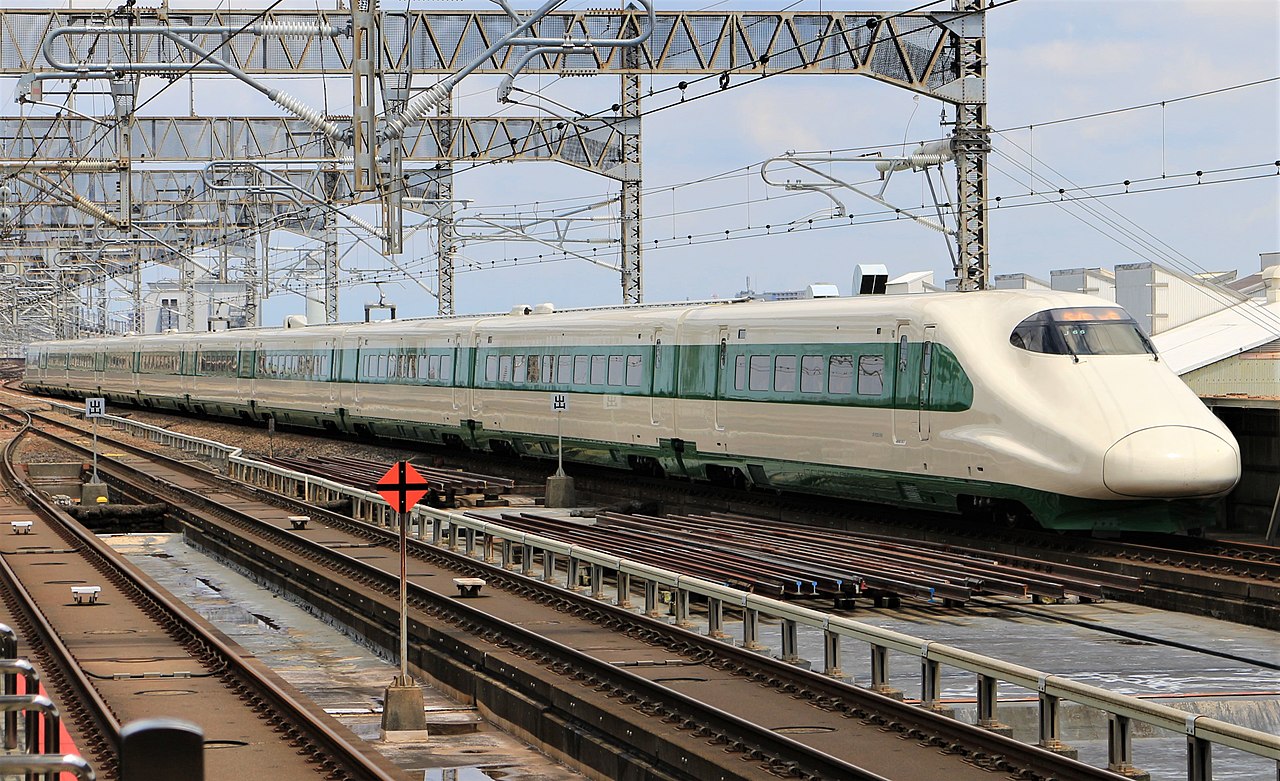
The service has worked through several generations of stock: 200 series 10-car sets from 1997, then E2 series 10-car sets from 26 January 2013 at up to 240 km/h, with the 200 series withdrawn on 16 March 2013; the E1 had left service in September 2012. E7 series 12-car sets entered service in 2019, the year Gran Class sales began. Under JR East's policy of standardising rolling stock line by line, the line is now run uniformly by Niigata-based E7 12-car sets; Gran Class is sold as seating only, without attendant service. At the 18 March 2023 revision the E2 was withdrawn and the line's maximum speed raised from 240 to 275 km/h. Earlier, the 14 March 2015 revision for the Hokuriku Shinkansen's Kanazawa extension had sharply reduced Tanigawa services, to nine Tokyo–Echigo-Yuzawa and three Tokyo–Takasaki round trips, and ended onboard trolley sales.
Timeline
- 1982On 15 November 1982 the Jōetsu Shinkansen opened; on the same day the name Tanigawa (written 谷川) was first introduced for a conventional limited express running between Ueno and Minakami on the Jōetsu Line.
- 1997From 1 October 1997 the Tōhoku and Jōetsu Shinkansen train names were reorganised by operating section; all Tokyo–Takasaki/Echigo-Yuzawa trains became Tanigawa (written たにがわ), taking over the all-stations role formerly held by the Toki, using 200 series 10-car sets.
- 2007From 18 March 2007 all Jōetsu Shinkansen trains, including the Tanigawa, became no-smoking.
- 2013E2 series 10-car sets were introduced on Tanigawa services from 26 January 2013, operating at a maximum of 240 km/h, and the 200 series was withdrawn on 16 March 2013.
- 2015At the 14 March 2015 timetable revision accompanying the Hokuriku Shinkansen extension to Kanazawa, Tanigawa was greatly reduced to nine Tokyo–Echigo-Yuzawa and three Tokyo–Takasaki round trips, and onboard trolley sales ended.
- 2019E7 series 12-car sets entered Tanigawa service in 2019 and Gran Class sales began.
- 2021On 1 October 2021 the E4 series was withdrawn from regular service, ending operation of the double-deck Max Tanigawa.
- 2023At the 18 March 2023 timetable revision the E2 series was withdrawn from regular Tanigawa duties and the line's maximum speed was raised from 240 km/h to 275 km/h.
Sources
Last updated 16 October 2026.
Gallery 4 photos
Every photo for this page. Tap any image to view it full-size. All from Wikimedia Commons (credit under each).