歴史
路線の起源は私鉄の房総鉄道で、房総半島の太平洋側を巡る鉄道として計画された。1896年1月に蘇我駅 - 大網駅間を開業したのが始まりで、同年2月に千葉まで延伸して総武鉄道と接続した。その後1897年に一ノ宮駅(現在の上総一ノ宮駅)、1899年に大原まで延伸された。1907年に鉄道国有法により国有化されて官設鉄道に編入され、1909年の国有鉄道線路名称制定で千葉 - 大原間が房総線とされた。以降も順次延伸され、1913年に勝浦、1927年に上総興津、1929年に安房鴨川まで達して全通し、北条線(現在の内房線の前身)と接続した。1933年には千葉 - 大網 - 安房鴨川間が房総東線として分離され、1972年に現在の外房線に改称された。
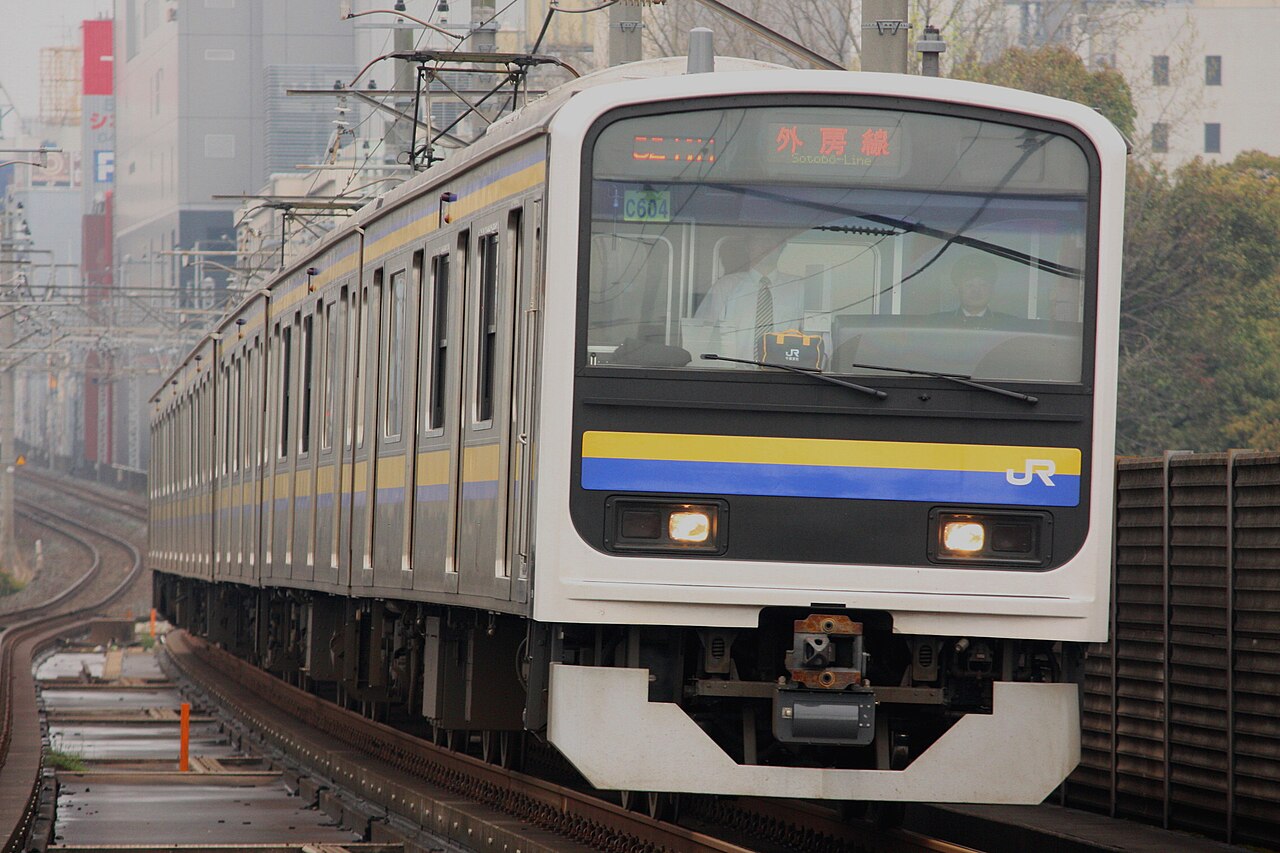
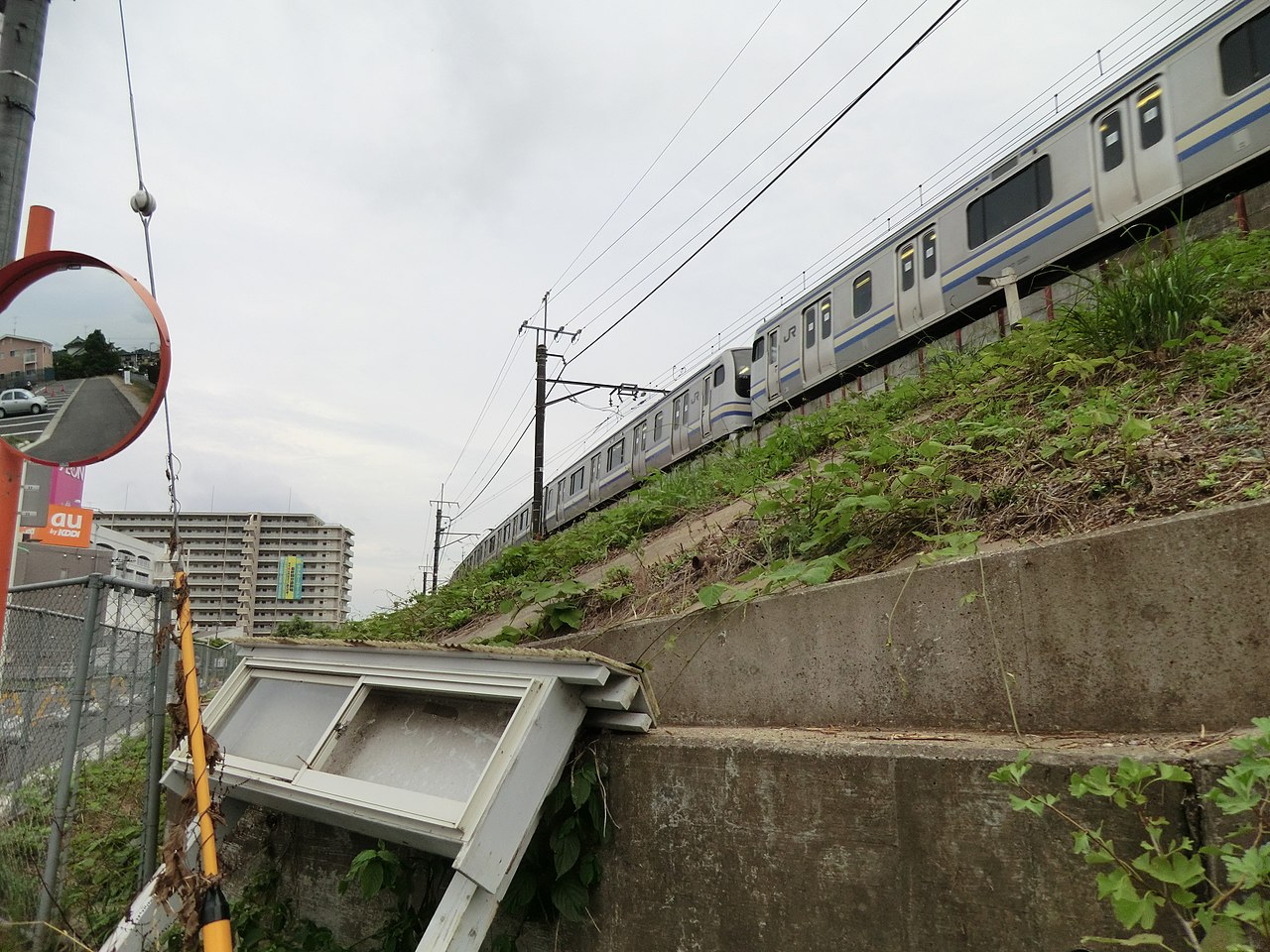
線路の改良は段階的に進められた。土気では、断面が狭小で老朽化した旧トンネルの区間で建築限界が改善された。複線化は長年にわたり区間ごとに行われ、千葉 - 蘇我間は1960年から1963年にかけて複線化された。その最終段階は、千葉駅を移設して同駅のスイッチバック(方向転換)を解消した1963年の工事と同時に行われた。1972年には大網駅も移設されてもう一つのスイッチバックが解消され、東京方面から大原方面へ方向転換なしで運転できるようになった。複線区間は1972年から1974年にかけて永田まで延長され、上総一ノ宮までの区間は1980年から1986年にかけて順次複線化された。さらに御宿 - 勝浦間は1995年、東浪見 - 長者町間は1996年に複線化された。ただし全線複線化には至っておらず、上総一ノ宮以南には単線区間が残る一方、より列車本数の多い上総一ノ宮以北は複線である。1970年代には蘇我 - 安房鴨川間に列車集中制御装置(CTC)が導入された。電化方式は全線とも直流1,500Vの架空電車線方式で、千葉 - 蘇我間は1968年7月に電化された。1972年7月には、外房線への改称と同じ日に183系電車による特急「わかしお」が運転を開始した。貨物営業は1982年から1987年にかけて、線内の大半の区間で順次廃止された。
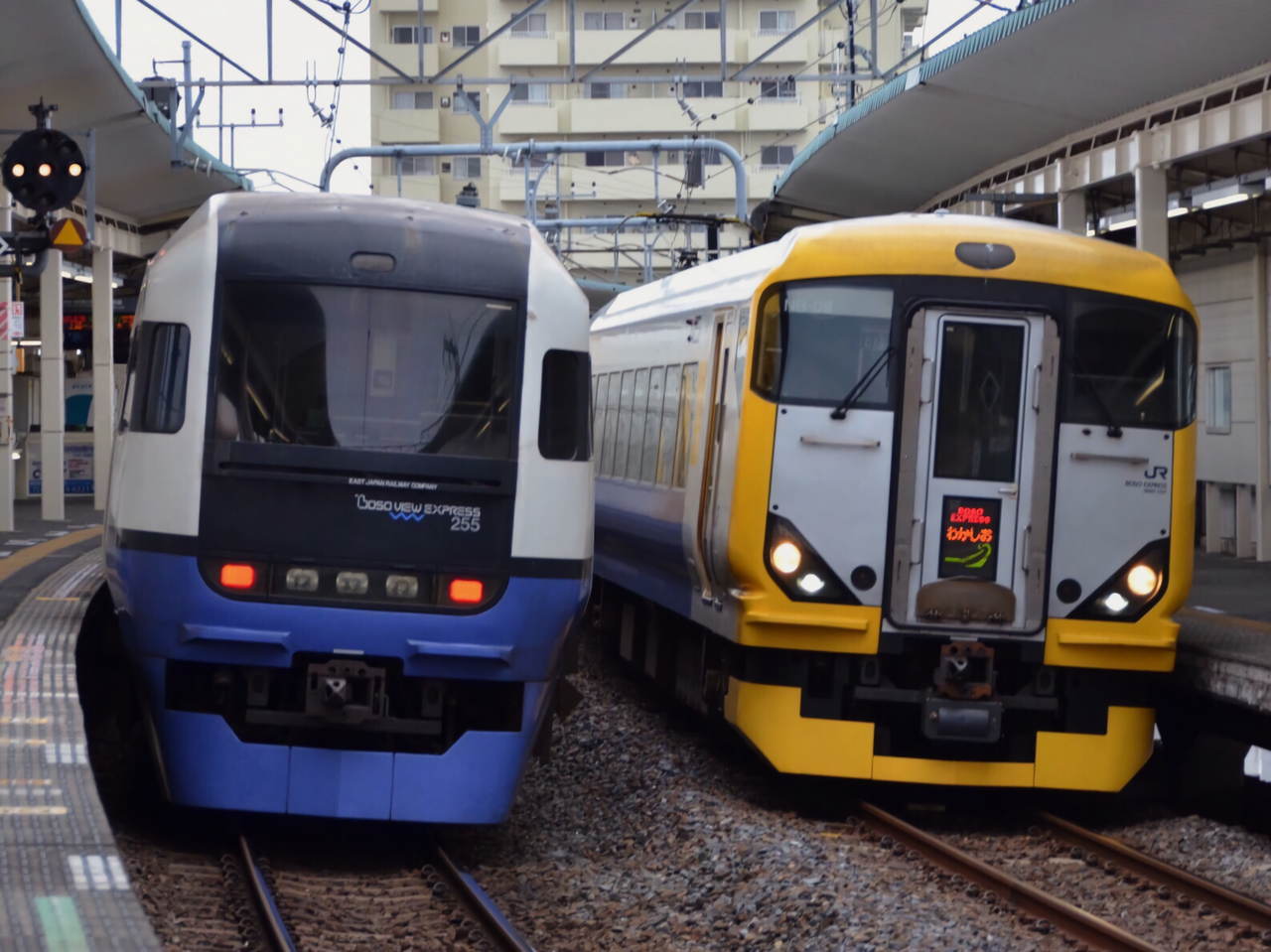
現在、JR東日本は普通列車に加え、快速および特急を運行している。特急「わかしお」は、東京から京葉線・蘇我を経由して安房鴨川まで運転される。週末には「新宿わかしお」も運転される。快速は総武快速線・横須賀線および京葉線から直通する。複線の千葉 - 上総一ノ宮間は列車本数が比較的多く、東京方面からの直通列車や東金線からの各駅停車が乗り入れる一方、単線区間のある南側では本数が少なくなる。かつて京葉線へ直通していた通勤快速は、2024年3月16日のダイヤ改正で廃止された。房総各線の中では、旅客人キロ・平均通過人員・旅客運輸収入のいずれもトップである。
 原寸大で表示(新しいタブで開きます)
近年の事故としては、2020年5月8日15時53分頃、安房天津駅 - 安房鴨川駅間で、安房鴨川発千葉行きの普通列車(209系)の先頭車両が脱線した。乗客16名と乗務員3名が乗車しており、乗客1名が軽傷を負った。運輸安全委員会は、踏切内のレール頭頂面付近にあった複数のバラストに先頭車両の前台車が乗り上げて脱線したものと考えられるとし、置き石の可能性はあるものの、詳細は明らかにできなかったとしている。
この路線の駅
本マップ収録の全27駅(五十音順)。各駅を選ぶとその駅のページを開けます。
- 安房鴨川Awa-Kamogawa
- 安房小湊Awa-Kominato
- 安房天津Awa-Amatsu
- 鵜原Ubara
- 永田Nagata (Chiba · JR East)
- 鎌取Kamatori
- 御宿Onjuku
- 行川アイランドNamegawa-Island
- 三門Mikado
- 勝浦Katsuura
- 上総一ノ宮Kazusa-Ichinomiya
- 上総興津Kazusa-Okitsu
- 新茂原Shin-Mobara
- 千葉Chiba
- 蘇我Soga
- 太東Taito
- 大原Ohara (Chiba)
- 大網Oami
- 長者町Chojamachi
- 土気Toke
- 東浪見Torami
- 八積Yatsumi
- 本千葉Hon-Chiba
- 本納Honno
- 茂原Mobara
- 誉田Honda
- 浪花Namihana
年表
この年表は英語のみです。
- 1896January: the Boso Railway opens its first section, Soga–Ōami. In February the line is extended to Chiba, connecting with the Sōbu Railway.
- 1897The line is extended to Ichinomiya (present-day Kazusa-Ichinomiya).
- 1899The line is extended to Ōhara.
- 19071 September: the Boso Railway is nationalised under the Railway Nationalization Act and absorbed into the government railways; its Chiba–Ōhara line is named the Boso Line on 12 October 1909.
- 191320 June: the line is extended from Ōhara to Katsuura.
- 19271 April: the line is extended from Katsuura to Kazusa-Okitsu.
- 192915 April: the line is extended from Kazusa-Okitsu to Awa-Kamogawa, completing the route and joining the Hōjō Line (forerunner of the Uchibō Line).
- 19331 April: the Chiba–Ōami–Awa-Kamogawa section is separated out as the Boso East Line (Bōsō-tōsen).
- 1954Works at Toke, where the old tunnel was narrow and ageing, are completed, improving the line's loading gauge (work begun 1952).
- 196328 April: Chiba Station is relocated, eliminating the switchback there; the Chiba–Soga section is double-tracked (completed 1960–1963).
- 196813 July: the Chiba–Soga section is electrified (1,500 V DC).
- 197215 July: the line is renamed the Sotobō Line and the 183-series limited express 'Wakashio' begins operating.
- 1986The line to Kazusa-Ichinomiya is fully double-tracked (progressive doubling 1980–1986).
- 19871 April: JNR is privatised; the line transfers to JR East. JR Freight becomes a Type II operator on the Chiba–Soga section.
- 199526 November: the Onjuku–Katsuura section is double-tracked.
- 199617 November: the Torami–Chōjamachi section is double-tracked.
- 200416 October: E257-500 series EMUs are introduced on the 'Wakashio' limited express.
- 20208 May, about 3:53 pm: the front carriage of a 209-series local service derails between Awa-Kamogawa and Awa-Amatsu, with 16 passengers and three crew aboard; one passenger is slightly injured. The Japan Transport Safety Board later finds that the train probably ran onto several pieces of ballast lying near the top of the rails at a level crossing; stones may have been placed there, but the details could not be established.
- 202113 March: E131 series EMUs are introduced on Kazusa-Ichinomiya–Awa-Kamogawa with one-man operation and through service to the Uchibō Line.
- 202416 March: Commuter Rapid services through to/from the Keiyō Line are discontinued.
出典
ギャラリー 3枚
このページの全写真 ― 画像をタップすると原寸大で表示します。すべてウィキメディア・コモンズより(各写真の下にクレジット)。