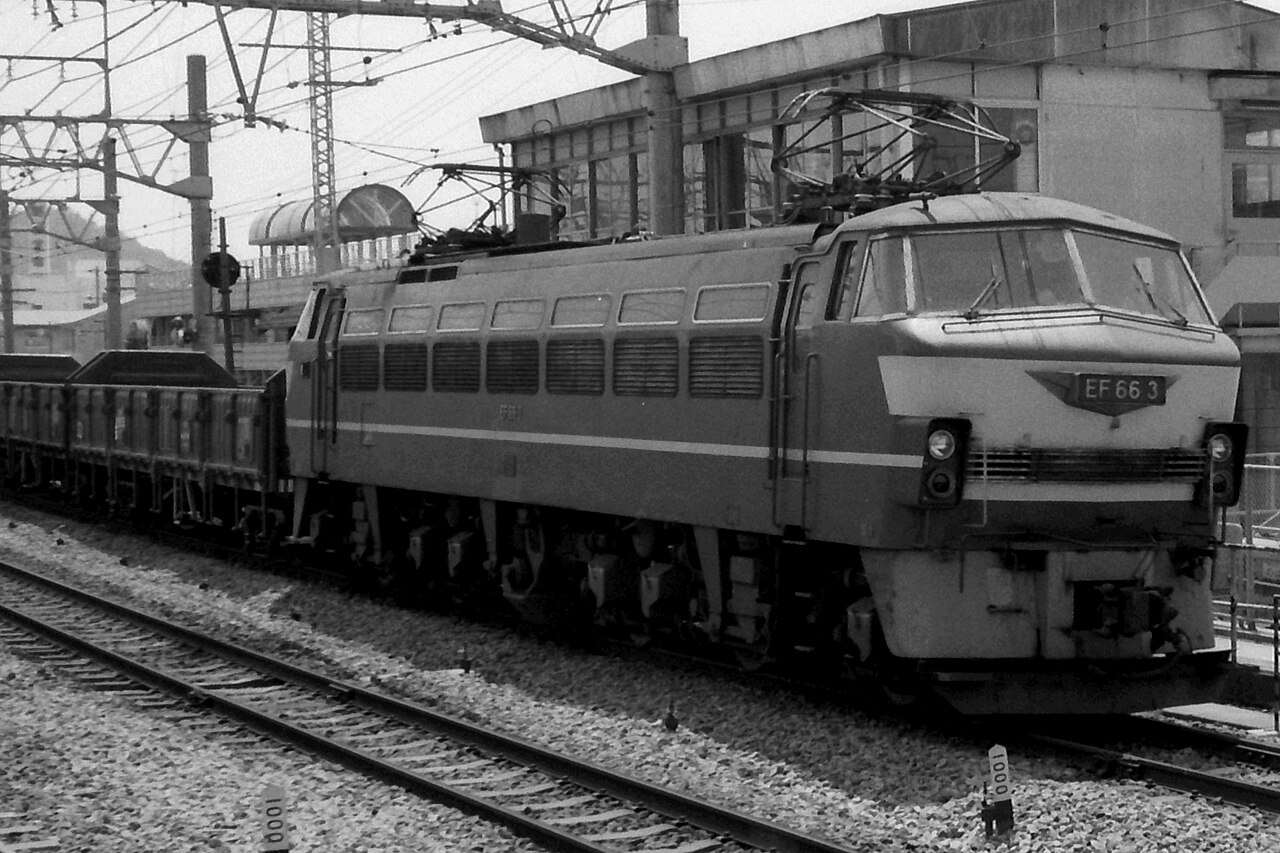
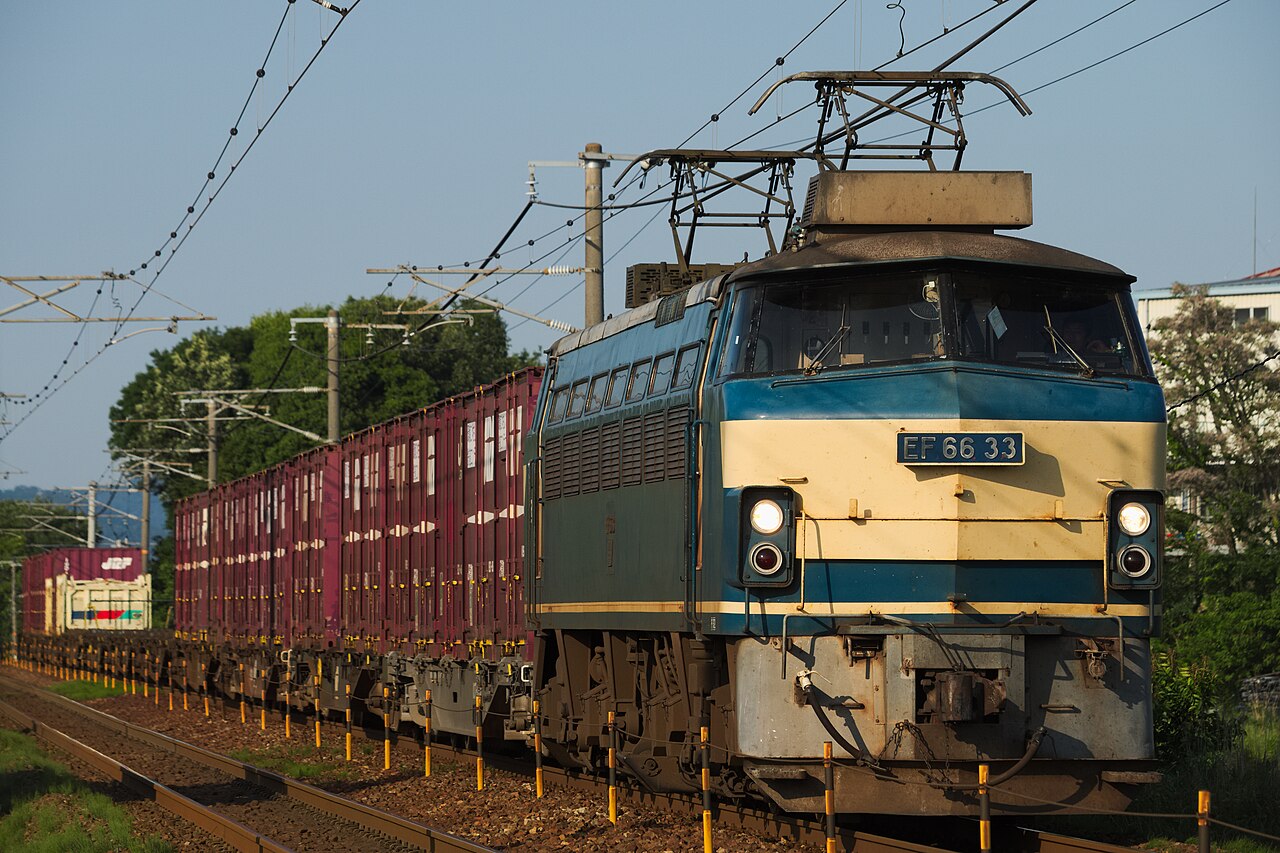
Original-design Class EF66 no. 3 hauling a freight train past Ofuna Station.(英語) · Hahifuheho · CC0 · Wikimedia Commons
年表
この年表は英語のみです。
1966A prototype locomotive, initially classified EF90 and numbered EF90 1, is built by Kawasaki Sharyo in September; with a total power output of 3.9 MW it is the world's most powerful narrow-gauge locomotive at the time. It is later renumbered EF66 901.
1968Production of the EF66-0 series begins; 55 locomotives (EF66 1–55) are built in two batches, each traction motor producing 650 kW (about 50% more than an EF65 traction motor).
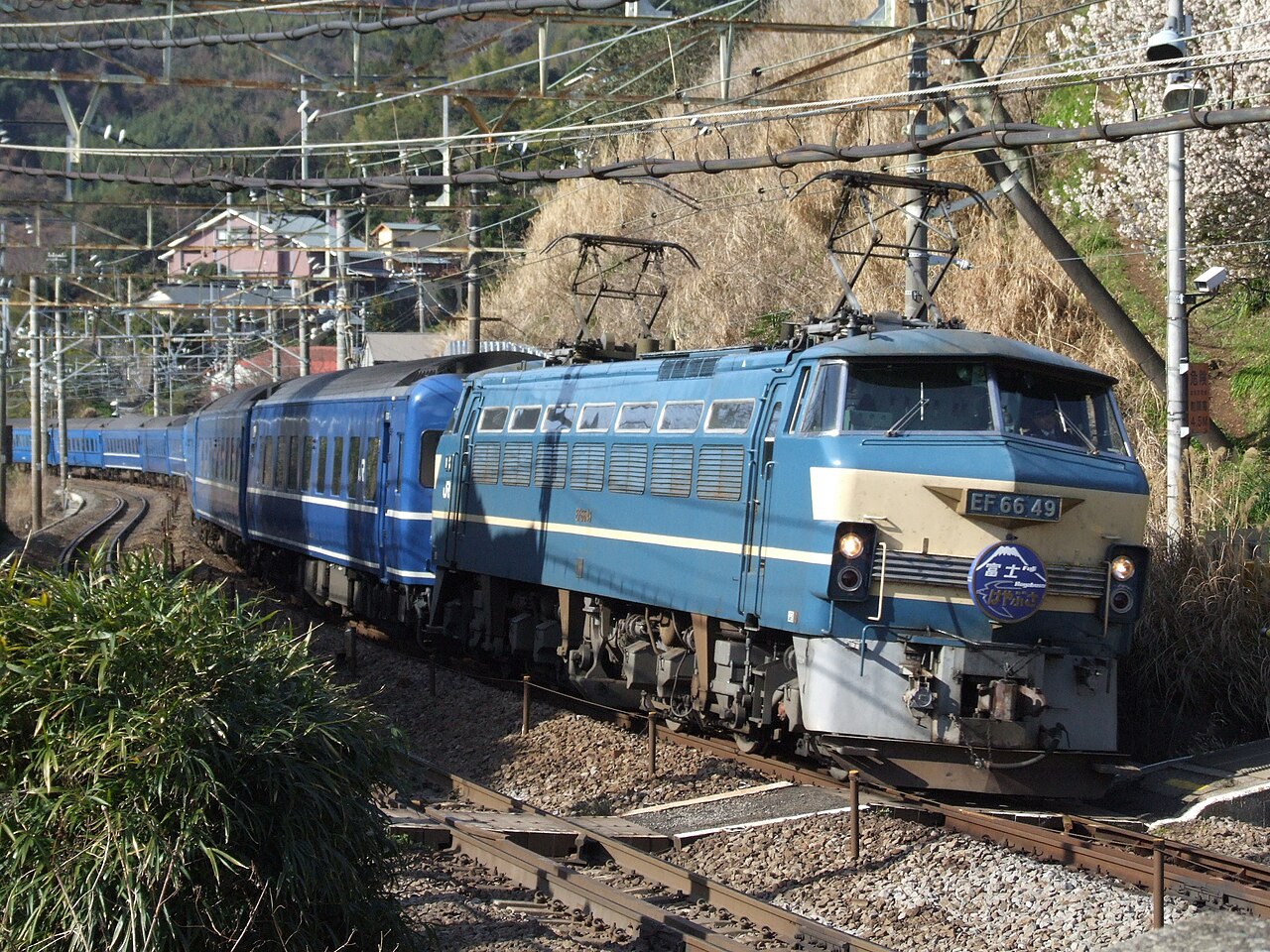
1985From the March timetable revision the class begins hauling sleeping-car limited expresses (Blue Trains) such as the "Hayabusa" and "Fuji" between Tokyo and Shimonoseki, in addition to its freight duties.
1987On the privatisation of JNR (1 April), JR Freight receives the prototype (EF66 901) and EF66 1–39 (40 locomotives) and JR West receives EF66 40–55 (16 locomotives).
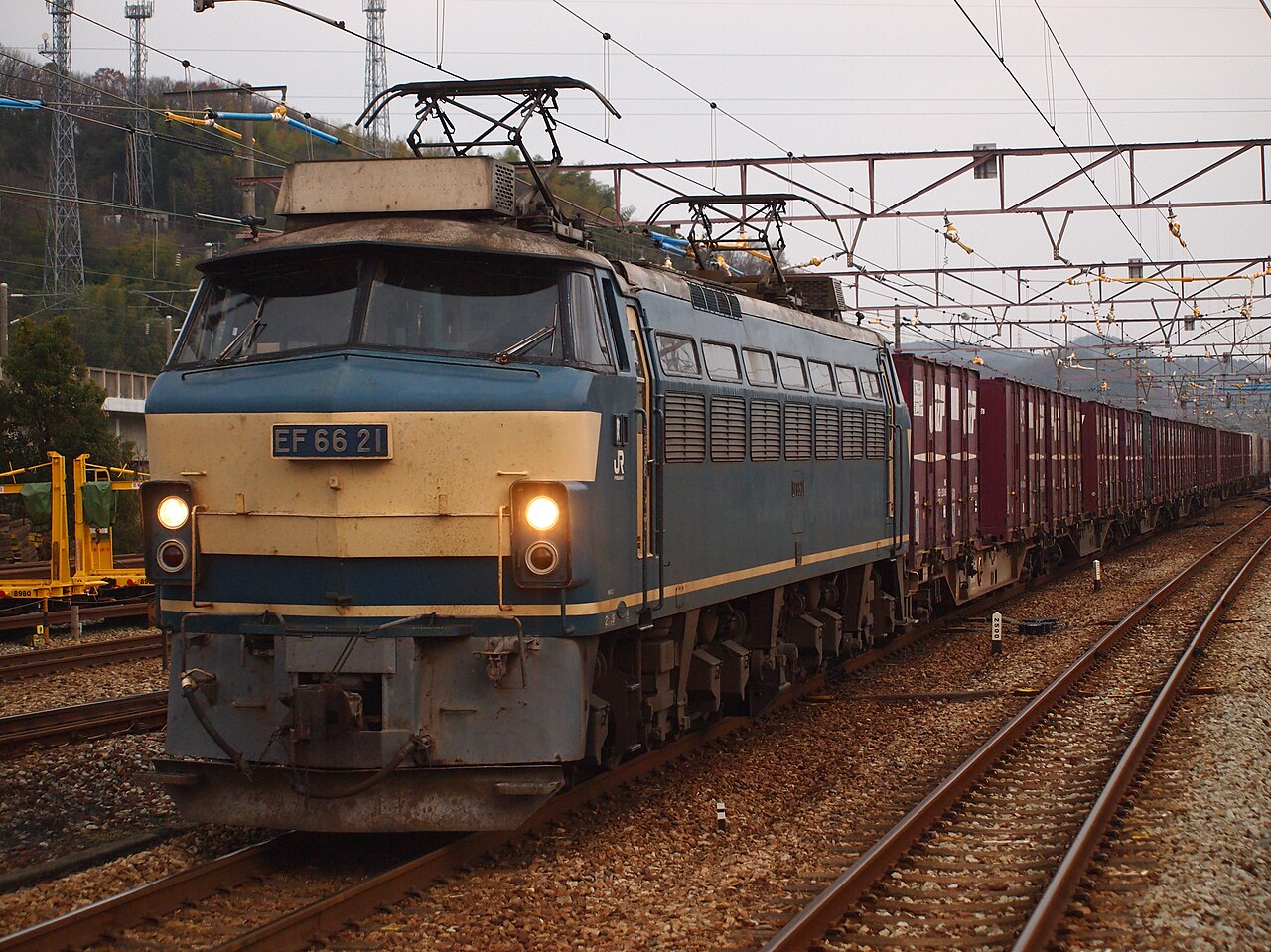
1989JR Freight begins building the EF66-100 sub-class (EF66 101–133), 33 locomotives delivered through 1991 with more modern external styling and air-conditioned cabs, to meet rising container demand.
2010JR West's last EF66s are withdrawn (struck off on 20 September), ending operation of the class by that company.
2022The last operational EF66-0, EF66 27 (nicknamed "Niina"), leaves scheduled service with the March timetable revision; its registration remained as of 2025.
2026Scheduled operation of the EF66-100 sub-class ends with a timetable revision, as the class is displaced by the Class EF210.